
Tooth Plaque vs. Artery Plaque
Artery plaque and tooth plaque are not the same. Learn more about the difference.
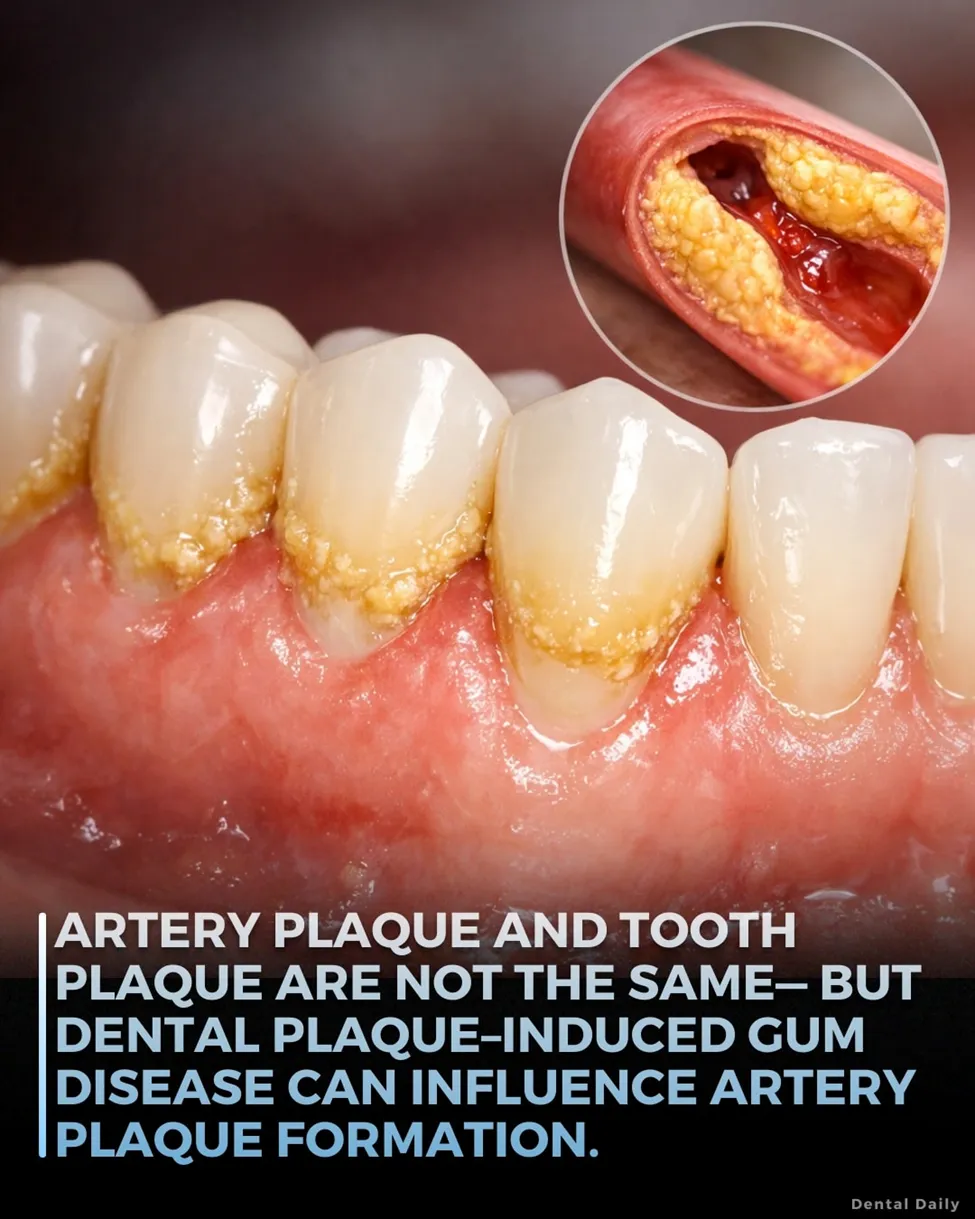
People often confuse tooth plaque and artery plaque because they share the same name — but they are biologically different.
Tooth plaque is a sticky bacterial biofilm that forms on teeth and leads to gum disease. Artery plaque, on the other hand, is a buildup of cholesterol, fat, calcium, and inflammatory cells inside blood vessel walls.
Although they are not the same substance, they are connected through inflammation and bacteria. Harmful oral bacteria from untreated plaque and gum disease can enter the bloodstream and trigger systemic inflammation. This inflammatory response is known to play a role in the development and destabilization of arterial plaques linked to heart attack and stroke.
Importantly, science does not say that tooth plaque turns into artery plaque. Instead, chronic gum inflammation acts as a long-term inflammatory burden on the body, which may accelerate atherosclerosis and increase cardiovascular risk.
What this means in daily life is simple:
Keeping plaque under control and maintaining healthy gums is not just about a clean smile. It may help reduce overall inflammatory stress in the body.
Brushing, flossing, and regular dental care are preventive habits that support whole-body health — not just oral health.
Shai Patel DDS
Precision Smiles
Want to schedule an appointment?